Bio-polishing and softening are not the same finish
In wool finishing, the words can drift together. A lot comes off the machine with a cleaner face and a better hand, so it is easy for internal specifications to describe bio-polishing and softening as if they deliver the same result.
They do not.
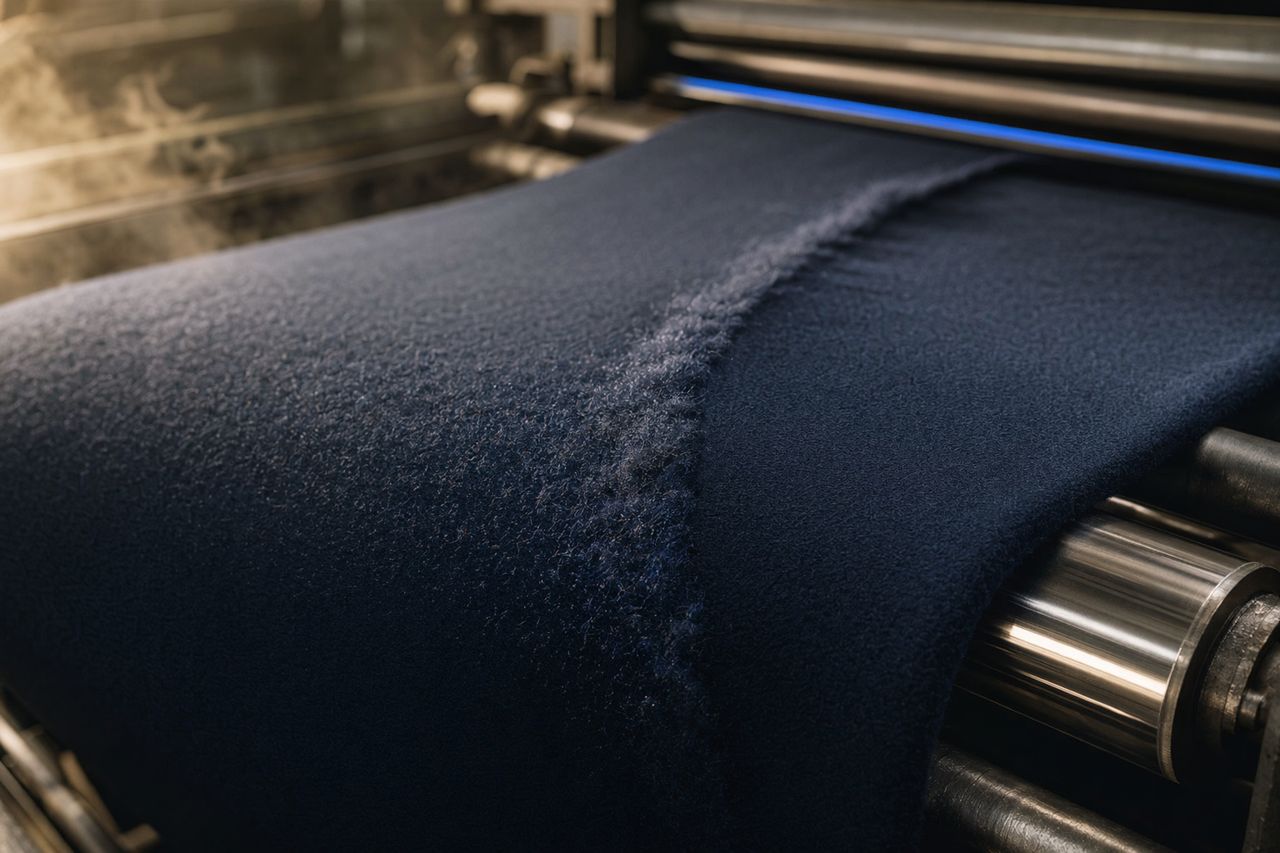
Bio-polishing is mainly a controlled surface-cleanliness step. It targets loose fiber ends, surface fuzz, and visual roughness so the fabric face looks calmer and pills less readily in use. Softening is mainly a handle-management step. It changes the way the fabric feels through lubrication, surface slip, mechanical relaxation, and finishing chemistry.
For a finishing manager, the distinction matters. It affects bath design, shade risk, claim language, rework decisions, and what the sales team can promise the customer.
Lanefold supports mills that need an enzyme supplier for wool processing mills with a practical view of finish performance: what the enzyme can improve, what it cannot replace, and how to set up repeatable lot-to-lot results.
The practical difference in one table
| Finishing aim | Bio-polishing | Softening |
|---|---|---|
| Primary purpose | Clean the fiber surface and reduce protruding fuzz | Improve hand, drape, and touch |
| Main perceived effect | Cleaner face, smoother surface, lower pilling tendency | Softer, fuller, silkier, or more lubricated handle |
| Main process lever | Controlled enzymatic surface modification | Softener chemistry, mechanical action, relaxation, finishing route |
| Typical buyer language | Looks cleaner, less hairy, better surface clarity | Feels softer, warmer, more fluid, more premium |
| Risk if overspecified | Fiber strength loss, shade disturbance, uneven finish | Greasy hand, shade shift, reduced sewability, poor durability |
| Best specification style | Surface appearance and pilling expectations | Handle target and durability after care |
What bio-polishing can reasonably promise
A well-controlled wool bio-polishing step can help create a neater fabric surface without treating the entire handle problem as an enzyme problem.
It can support surface cleanliness
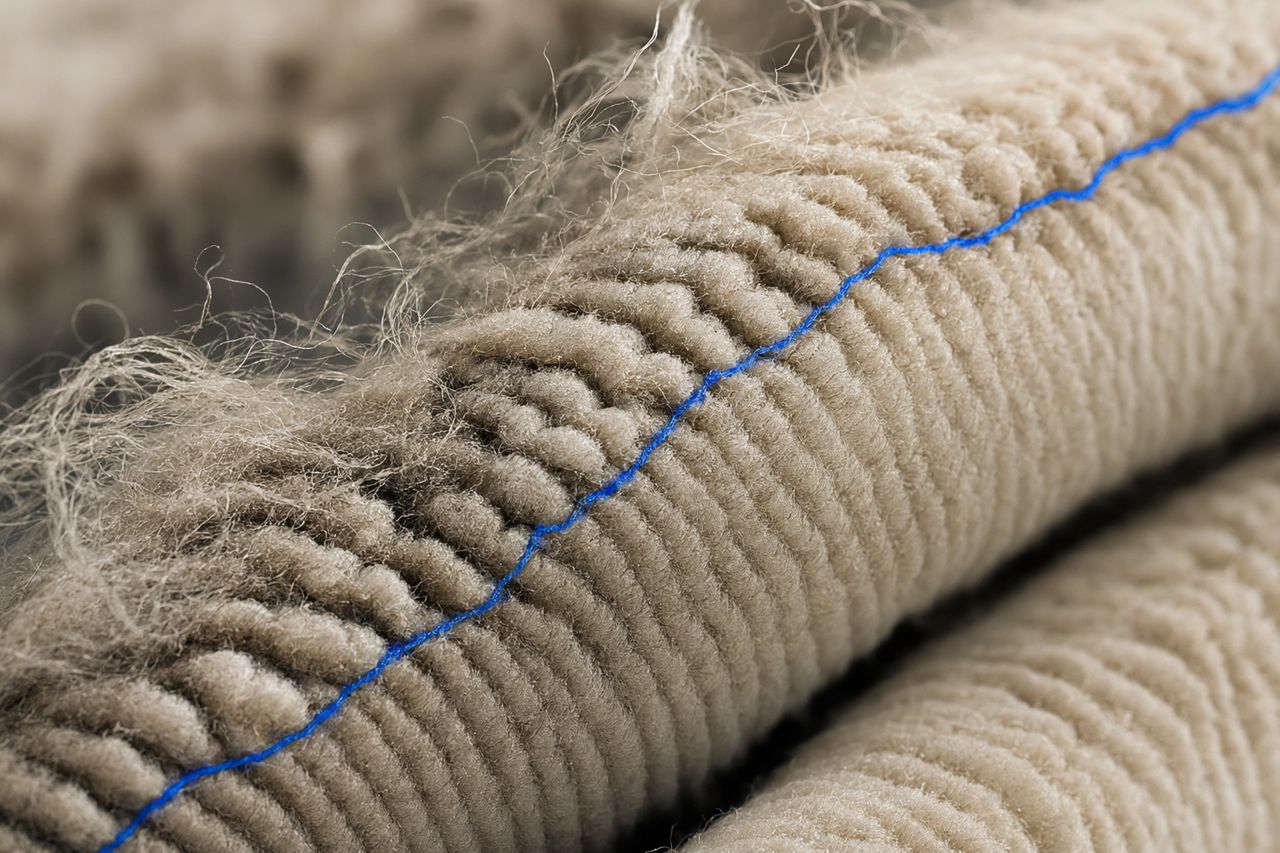
Wool fibers have a complex surface. Loose ends, lifted scales, processing abrasion, and yarn hairiness can all contribute to a busy visual face. Bio-polishing helps reduce the prominence of this surface disturbance when the mill has the right fabric construction, pretreatment, liquor movement, and process window.
The best improvements are often visible in:
- reduced fuzz on the face side
- calmer surface reflection under directional light
- improved apparent clarity on solid shades
- cleaner presentation after drying and raising decisions
- reduced tendency for pills to form from loose fiber ends
This is especially useful where the buyer wants a premium, composed wool appearance rather than a heavily milled or brushed look.
It can help with pilling control
Pilling is not caused by one factor. Fiber length, yarn twist, blend content, fabric construction, abrasion, dyeing history, and garment use all matter. Bio-polishing can reduce one part of the problem by removing or weakening certain exposed fiber ends before they become pills.
That does not make it a universal anti-pilling guarantee. It is better described as a contribution to a pilling-control system.
It can improve finish consistency when controlled correctly
Bio-polishing is sensitive to bath conditions. A stable process gives the enzyme a predictable working environment. A drifting process produces inconsistent surface modification, which may show up as lot variation, excessive weight loss, altered shade depth, or uneven face quality.
A production-minded specification should define:
- fabric type and blend boundaries
- target surface effect
- acceptable strength retention
- shade and tone tolerance
- compatibility with dyeing and softening sequence
- rinse and stop-point discipline
- inspection method used by the mill
The strongest programs are not built around maximum enzyme action. They are built around enough surface effect with safe fabric performance.
What bio-polishing cannot promise
It cannot replace a softener
Bio-polishing may make the fabric feel smoother because fewer loose fibers catch the hand. But that is not the same as true softening. A softener can add lubrication, reduce surface friction, change drape, and create a fuller or silkier touch depending on the chemistry selected.
If the customer wants a cashmere-like hand, a lofty brushed touch, or a highly lubricated apparel feel, bio-polishing alone is usually the wrong promise.
It cannot fix every pilling issue
If pilling is driven by yarn structure, blend behavior, or garment abrasion, surface enzymatic treatment may only offer partial benefit. Over-treating to chase a pilling number can damage the fabric more than it helps the claim.
It cannot correct poor upstream preparation
Scouring residues, uneven wet-out, prior harsh mechanical treatment, and inconsistent dyeing can reduce control. The enzyme step should not be expected to rescue an unstable process. It performs best when the substrate arrives clean, evenly prepared, and suitable for controlled finishing.
It cannot be judged only by first touch
A fabric can feel impressive immediately after finishing and still fail in wear, pressing, sewing, or care. Bio-polishing should be evaluated through the full quality lens: face appearance, handle, strength, shade, dimensional behavior, and durability after the intended care route.
What softening can reasonably promise
Softening is the finishing route used to tune touch. It may be chemical, mechanical, or both. In wool, the target may be warm and full, dry and natural, sleek and tailored, or smooth and premium.
A good softening program can help deliver:
- reduced harshness
- improved drape
- better surface slip
- warmer touch
- improved garment comfort
- easier tailoring feel
- a more premium impression at inspection
But softening has its own constraints. Too much softener can reduce absorbency, cause sewing issues, change shade perception, produce a greasy hand, or reduce performance after repeated care. The finish must match the fabric and the end use.
How the two finishes work together
For many wool processing mills, the best result is not choosing bio-polishing or softening. It is sequencing them correctly.
A typical logic is:
- Prepare the fabric so wet-out and bath movement are even.
- Apply controlled bio-polishing to reduce surface fuzz and improve face clarity.
- Stop and rinse with discipline to protect strength and shade.
- Apply the selected softening route to tune handle.
- Dry and finish under consistent mechanical conditions.
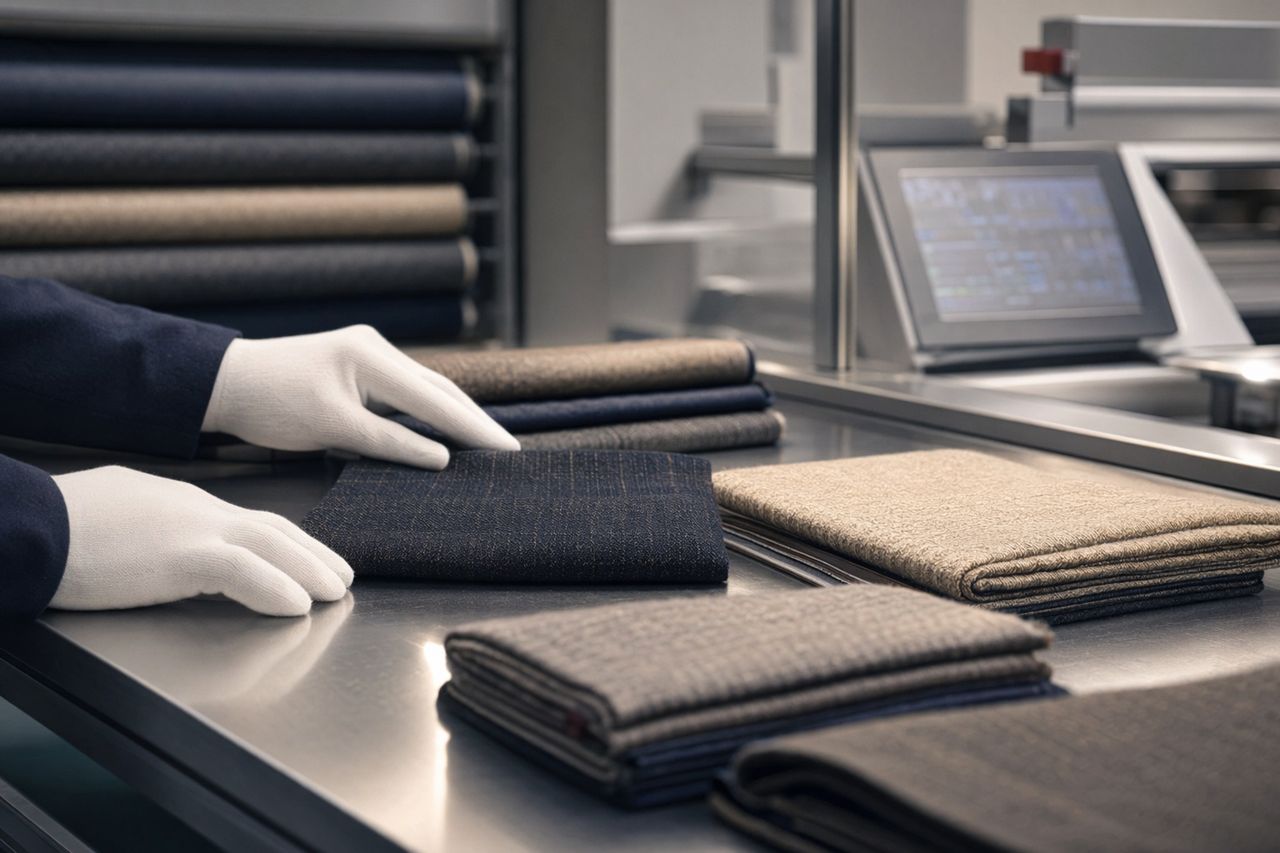
- Inspect both face appearance and hand before releasing the lot.
The order matters because a heavy softener before enzymatic treatment can interfere with surface access. A poorly stopped enzyme step can continue to influence the fabric beyond the intended window. Excessive mechanical finishing after bio-polishing can reintroduce fuzz or change the surface impression.
Writing better internal specifications
A useful internal spec separates the surface target from the handle target.
Instead of this
- Soft bio-polished finish with low pilling and premium hand.
Use this
- Bio-polishing target: visibly cleaner face, reduced surface fuzz, controlled pilling tendency, no unacceptable strength loss, no visible shade disturbance.
- Softening target: warm, smooth hand with suitable drape for the garment program, no greasy touch, no sewing interference, durable through the agreed care route.
This makes the finish easier to reproduce and easier to troubleshoot. If the face is clean but the hand is too dry, adjust the softening route. If the hand is good but the face is still hairy, review the bio-polishing setup and fabric suitability. If shade has shifted, examine both the enzyme window and softener selection rather than blaming the final touch alone.
Common mill problems and what they usually mean
The fabric feels softer, but still looks fuzzy
This usually means the softening route improved touch but did not remove enough surface disturbance. Review whether the substrate is suitable for bio-polishing, whether wet-out is even, and whether the treatment window is strong enough without risking fiber damage.
The surface is clean, but the hand is too dry
The bio-polishing step may have achieved the face target, but the softener system is not delivering the desired handle. Treat this as a softening formulation or mechanical finishing issue, not as a reason to overrun the enzyme step.
Shade looks flatter or slightly changed
Surface modification can alter light reflection, especially on dark or saturated shades. Softener choice can also change shade perception. Build shade checks into the sequence and avoid approving by wet inspection alone.
Strength or tear performance drops
The process may be too aggressive for the fiber, construction, or time in bath. Reduce the severity of the surface modification and confirm whether mechanical action is contributing to the loss.
Lot-to-lot results are unstable
Look first at preparation, bath loading, wet-out, setpoint discipline, fabric history, and stop-point consistency. Enzymatic finishing rewards process control; it does not mask variation.
Buyer value: fewer vague finish claims, less rework
When bio-polishing and softening are defined separately, the mill can quote and produce with more confidence.
The benefits are practical:
- clearer communication between dyehouse, finishing, quality, and sales
- fewer overpromises to apparel or interior textile buyers
- reduced rework from misunderstood hand targets
- better protection of shade and fiber strength
- more reproducible lots across repeat orders
- faster troubleshooting when a finish misses target
This is where Lanefold fits. We help wool processing mills use enzyme solutions as controlled production tools, not vague finishing shortcuts.
When to involve Lanefold
Bring us into the conversation when you are:
- developing a cleaner-face wool finish
- trying to reduce fuzz or pilling tendency without harsh handle loss
- separating enzyme action from softener performance in your spec
- seeing shade or strength variation after surface treatment
- scaling a lab finish into repeat production
- comparing finishing routes for premium wool programs
As an enzyme supplier for wool processing mills, Lanefold focuses on practical bath behavior, substrate fit, sequence design, and reproducible finishing outcomes.
Request a quote
If you are planning a wool bio-polishing trial or revising a finish specification, send your fabric type, shade range, current finishing route, and target outcome through the on-site request a quote form. Lanefold will help you review the fit and quote an enzyme solution for your mill conditions.